
Walking into a Canberra club on a busy arvo, you will see the blackjack tables humming long before the pokies get attention. A printed blackjack basic strategy table sits on the rail for a reason: it turns guesswork into a repeatable decision map for every hard total, pair, and soft hand against the dealer upcard. I have spent fifteen years building slot math models and running hit-frequency simulations, and I can tell you that a table like this is closer to a calibrated payline spec than a lucky charm. It does not promise a win, but it removes the worst calls before you press spin or take a card.
Reading the Table Without the Guesswork
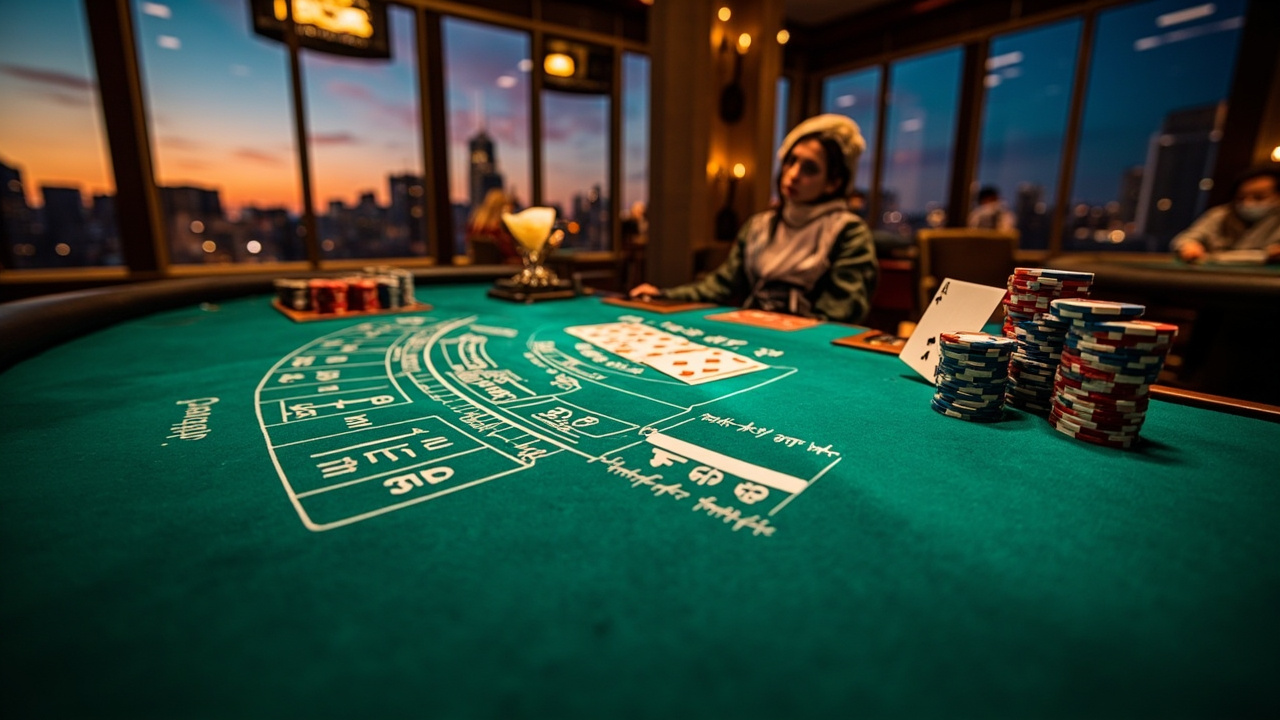
The grid is simple on paper but demands discipline at the felt. Across the top you have the dealer’s visible card; down the side you have your hand total or pair. Each cell tells you whether to hit, stand, double, or split, and the soft-hand rows change the call when an ace is in play. I treat the layout the same way I spec a bonus round: every branch has a defined outcome, and the house edge shifts by fractions of a percent depending on how often you follow the chart instead of improvising. If you are playing a standard Australian club game where the dealer stands on soft 17 and you can double on any two cards, the table lines up with that rule set; swap in a late-surrender variant or a six-deck shoe and you need a chart that matches, because the math changes underneath you.
For anyone checking live dealer streams from home, the same discipline applies, and our companion piece on live blackjack odds, strategy, and the ViuViu Casino experience spells out how the digital pace changes your timing. The key is to pre-decide your line before the cards land, because hesitation is where costly deviations sneak in. I have run enough simulations to know that even a small drift from the chart on hard 12 through 16 against a dealer ten or ace adds up over thousands of hands, not because any single hand is decisive, but because the expected value compounds the way it does on any calibrated game.
Where the Table Meets Real Limits
A chart only works if the table rules and your bankroll control line up with it. In a local Canberra venue, the practical limits are set by table minimums, deck count, and whether doubling or splitting is restricted after a split, so the first thing I check is the placard before I even think about the grid. I have written specifications for bonus mechanics that hinge on wagering paths and game weighting, and the same mindset applies here: the chart assumes a rule set, and if the rule set changes, the optimal call changes with it. That is why a blackjack basic strategy table should be matched to the exact variant on the felt, not borrowed from a different game and hoped to fit.
Operators tend to see the table as a way to standardise play and reduce erratic bet sizing, while regulators focus on the surrounding controls that keep the game transparent. Oliver Martin, Head of Operator Partnerships at Federation Betting Insights, puts it plainly: a strategy chart is useful only when the underlying rule set is published clearly and the same chart is not sold as a shortcut through a game that pays differently on blackjacks or splits. On the player side, the counter-view is that the table removes emotion and keeps decisions consistent, which is true, but consistency is not the same as an edge when the house already sets the terms. I side with the operator view on one point and the player view on another: the chart is a decision aid, not a licence to ignore limits.
AUSTRAC has already pursued civil penalties against Crown and Star for money-laundering breaches, which is a reminder that the environment around the table matters as much as the decisions on it. That history is why I look for clear account controls, visible terms, and a support line that can actually answer a query before I settle into a session. Security and privacy are not decorative; they are the baseline that lets a player use a chart without wondering whether the surrounding setup is sound. If the venue or platform cannot show that baseline, the grid on the rail is the least of your concerns.
Making the Chart Work at the Table
Using the table well is mostly about rhythm and restraint. I keep the chart visible, mark the rule set in my head, and treat each hand as a separate decision rather than a story about the last one. Doubling and splitting entries are where most players drift, because those calls feel aggressive and the temptation to bend the chart after a bad beat is strong. In my experience building game logic and running variance models, the cost of those deviations is subtle at first and then cumulative, so the discipline is in repeating the same call under the same inputs, hand after hand.
Dylan Gray, Strategy Director at Swan River Interactive, notes that the practical value of a strategy table shows up most when players pair it with a firm stop-loss and a clear exit line, because the chart manages decisions, not downturns. That is the part I agree with most: the grid tells you what to do with a given total, but it does not tell you how long to stay at the table or how to size your bets relative to your bankroll. The two things have to work together, or the chart becomes a precise tool used in an imprecise session. When the dealer changes pace or the shoe runs hot and cold, the right move is still the one the chart prescribes for that total and that upcard.
For a player in Canberra or anywhere else in Australia, the practical win is consistency, not a guaranteed outcome. Keep the chart matched to the rules, respect the limits, and treat each decision as a single line in a much longer run. No one walks away from a blackjack table with certainty, but a blackjack basic strategy table at least removes the cheapest mistakes before they happen.
When the routine holds up across weeks and months, the small edges begin to compound without forcing a single result. Players who log their sessions on our web page and step back when the limits are reached tend to stay within the practical bounds of the game. If you want to compare how different platforms structure their promotions, you can review the spinsamurai bonus details at https://spinsamuraibonus.net/.Live Blackjack Odds, Strategy, and the
- Hard total: a hand without an ace, or with an ace counted as one.
- Soft total: a hand with an ace counted as eleven.
- Double: doubling your stake for one extra card.
- Split: turning a pair into two separate hands with an extra bet.
- Surrender: forfeiting half your stake before playing the hand, where allowed.